
Wholesale sourcing notes
Can Plywood Resist Moisture?
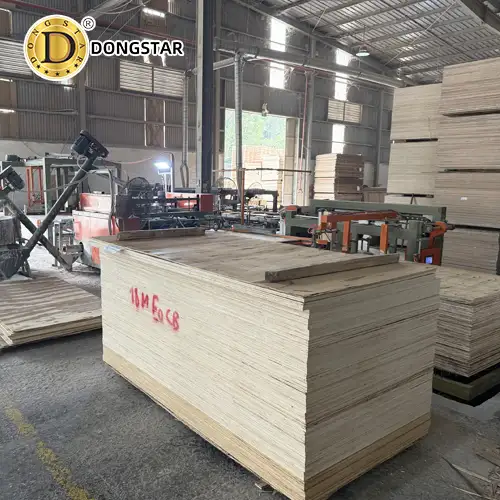
Yes. Plywood can resist moisture, but the level depends on its adhesive bond, veneer quality, panel grade, finish, and exposure time. In normal occupied buildings, wood often stabilizes around 6–14% moisture content; prolonged levels near 20–25% raise the risk of mold and decay. APA classifies structural plywood mainly as Exposure 1 or Exterior: Exposure 1 handles temporary construction moisture, while Exterior panels are intended for repeated wetting and long-term weather exposure. Marine plywood adds tighter veneer and construction requirements. Moisture can still enter through cut edges, fastener holes, joints, and damaged coatings, so even high-grade panels need suitable detailing and protection.
Plywood handles moisture better than many people expect because adjacent veneers are normally laid with their grain directions crossing each other. Wood moves far more across the grain than along it, so this layered construction limits some of the dimensional movement seen in solid boards. The USDA Forest Products Laboratory notes that wood movement becomes important below a fiber-saturation region commonly treated at about 30% moisture content, where changes in cell-wall moisture produce shrinkage or swelling.
That construction does not stop water absorption. The face veneer, exposed edges, drilled openings, and any unsealed machining can still take up water. Once enough moisture enters, a panel may become thicker at its edges, develop a rougher face, cup, or show checking. Whether the layers stay bonded depends heavily on the adhesive system and the way the plywood was manufactured.
Water resistance in plywood is mainly a question of how well the glue bond and panel construction tolerate wetting, not whether wood fibers stop absorbing water.
That distinction explains why the grade stamp matters more than a general claim such as “water-resistant plywood.” Under U.S. Product Standard PS 1-22, updated in 2023, structural plywood requirements cover species, veneer grades, adhesive bonds, construction, workmanship, dimensions, tolerances, and panel moisture content. Structural plywood can carry either an Exposure 1 or Exterior bond classification.
Exposure 1 is often misunderstood. It uses exterior-type adhesives and is designed to withstand moisture encountered during construction delays or similar limited exposure, but APA does not classify it for permanent weather exposure. Panels commonly called CDX may fall into this category, so the “X” should not automatically be read as a guarantee that the sheet can remain outdoors indefinitely.
Exterior plywood is designed for a more demanding moisture cycle. APA states that Exterior bonds are suitable for repeated wetting and drying or long-term exposure to weather, provided the panel is used, finished, and maintained appropriately. That extra tolerance comes from the bond classification, not from a promise that the wood itself cannot swell, weather, discolor, or decay.
| Plywood condition | Typical moisture exposure | Practical use |
|---|---|---|
| Interior-grade panel | Low indoor humidity, little liquid water | Furniture, shelving, dry cabinetry |
| Exposure 1 | Temporary wetting during construction | Roof, wall, and subfloor sheathing later protected |
| Exterior | Repeated wetting and redrying | Exterior construction with suitable finishing |
| Marine-grade plywood | Demanding wet environments | Boats, marine joinery, selected exterior work |
| MDO/HDO exterior panels | Weather plus demanding surface use | Signs, concrete forms, exterior specialty work |
Moisture content gives another way to judge risk. APA notes that completed buildings commonly allow wood products to settle into a 6–14% in-service range. Once in-service moisture reaches 16% or more, Exposure 1 and Exterior structural panels can require reductions in design values. If moisture remains around 20–25% or higher for an extended period, conditions become increasingly favorable for fungal decay and mold growth.
The duration of wetting matters as much as the reading on a moisture meter. A panel that reaches a high moisture level after a brief rain and then dries from both faces is exposed to a different condition from plywood trapped behind an impermeable finish or inside a poorly ventilated assembly. Repeated wet-dry cycling can also produce surface checking and edge changes even when the glue bond remains intact.
Panel edges usually deserve more attention than broad factory faces. A cut edge exposes several veneer layers at once, giving liquid water multiple entry paths. Screw holes and routed openings create similar paths. A 4 × 8 ft panel may have a large protected face area, yet only a few feet of poorly sealed edge can provide enough access for local swelling around a cabinet base, roof edge, soffit, or exterior joint.
For that reason, fabrication should be considered before finishing. Seal freshly cut edges after sizing, coat drilled holes when the application is regularly wet, and avoid leaving end sections in standing water. When two panels meet outdoors, detailing should allow water to drain rather than remain between their edges.
A finish can slow moisture entry, but the finish type changes how much protection is available. Exterior acrylic coatings are widely used on plywood siding and exposed architectural panels, while polyurethane is common where a clear appearance is preferred. Epoxy coatings can provide a much less permeable layer when properly applied, although any missed edge, damaged screw hole, or later cut can reduce the protection of the whole coating system.
A coating protects the surface it actually covers. It does not change an unsealed cut edge into waterproof wood.
MDO and HDO panels show how surface construction can improve outdoor performance. APA states that both Medium Density Overlay and High Density Overlay plywood are manufactured with Exterior bond classification and 100% moisture-resistant adhesive. HDO commonly uses B-grade or better face veneers, while regular MDO uses B-grade faces with C-grade inner plies. Both remain wood-based panels and still need appropriate detailing where water can enter around edges or penetrations.
Marine plywood takes a different approach. Its advantage is not simply “stronger glue.” Marine grades are produced with durable exterior-type bonds and tighter controls over veneer quality and internal construction, reducing defects that could become weak or moisture-trapping areas. A buyer comparing panels through a Plywood Supplier should therefore check the governing grade, bond classification, veneer species, face quality, thickness tolerance, and intended exposure instead of relying only on the word “marine.”
Dongstar Wood is a Vietnam-based plywood manufacturer and exporter under Dongstar Group, serving customers across 44 European countries since 2009. We specialize in commercial plywood, film faced plywood, construction plywood, birch plywood, furniture plywood, and customized plywood solutions.
Backed by CE 2+, FSC®, EUDR, DOP, and SEDEX (BSCI) certifications, we meet European standards for quality, sustainability, and compliance. With over 15 years of manufacturing and export experience, we support importers, distributors, furniture manufacturers, and construction companies with reliable plywood supply and OEM/ODM solutions.
Thickness alone provides little information about moisture resistance. A 19 mm interior panel can be less suitable outdoors than a 12 mm Exterior panel because adhesive durability and panel construction determine whether repeated wetting is acceptable. Thickness is mainly selected for stiffness, load capacity, span, fastening, and impact requirements; exposure classification deals with moisture separately.
The same separation applies to strength ratings. APA specifically notes that bond classification is not a direct measure of structural strength or fungal-decay resistance. A Structural I panel, for example, can carry either Exposure 1 or Exterior classification. Likewise, a panel with a high span rating is not automatically more suitable for rain.
Bathrooms illustrate why exposure has to be defined carefully. Plywood inside a vanity may experience occasional splashes and room humidity, while plywood used beside a shower can face repeated liquid-water contact. The first condition may be handled by suitable plywood plus sealed faces and edges; the second normally requires a complete waterproofing assembly because the panel itself should not be treated as the water-control layer.
Kitchens present a similar pattern. Cabinet boxes away from plumbing often remain within ordinary indoor moisture conditions, while sink bases can be exposed to slow plumbing leaks. A small leak lasting several days can keep an enclosed panel wet far longer than a larger spill that is noticed and dried within an hour. Removable liners, sealed edges, accessible plumbing connections, and airflow can therefore affect service life as much as the plywood grade.
Outdoor applications add rain, solar heating, cooler nights, condensation, and repeated seasonal humidity. Face checking can occur on non-overlaid plywood exposed outdoors even when it has been finished, according to APA guidance. Exterior panels tolerate the bond stresses associated with those conditions better than Exposure 1 panels, but protected edges, maintained coatings, drainage gaps, and suitable flashing are still part of the assembly.
Roof sheathing shows why “temporary” exposure is an important category. Exposure 1 panels are commonly used because a partially completed roof may receive rain before roofing is installed. A span rating such as 32/16 describes support spacing rather than water resistance: the first number refers to maximum roof-support spacing in inches, while the second applies to subfloor support spacing. Moisture classification must be read separately from that structural rating.
Storage before installation can also alter performance. Sheets should be kept off the ground and protected from direct rainfall while still allowing air circulation. Wrapping wet plywood tightly in plastic can slow drying, while storing panels flat and supported reduces the chance of permanent bowing. The goal is not to keep wood at 0% moisture, which is unrealistic in normal construction, but to prevent long periods above the levels associated with dimensional instability and biological growth.
When plywood does become wet, appearance alone is not enough to judge damage. Raised grain or moderate thickness swelling can remain visible after drying, while the structural bond may still be serviceable. APA reports that moisture-related swelling or surface changes do not necessarily produce loss of structural capacity once a panel returns to normal in-service moisture conditions.
Delamination deserves more concern. If veneers separate, remain blistered after drying, or move independently when pressed, the panel no longer behaves like a properly bonded laminate. Soft wood, widespread fungal decay, severe distortion, or damaged fastener zones also justify closer inspection, particularly in structural floors, roofs, walls, and diaphragms.
For ordinary purchasing, a short specification check removes much of the uncertainty:
-
Read the bond classification: Exposure 1 and Exterior are not interchangeable.
-
Verify the governing standard; PS 1-22 is a current U.S. structural plywood standard.
-
Match veneer grade to appearance and service requirements rather than moisture exposure alone.
-
Treat marine, MDO, and HDO as defined product categories, not generic marketing language.
-
Seal new edges, holes, and field cuts where repeated moisture exposure is expected.
-
Design joints so water can leave instead of collecting between panels.
-
Investigate moisture readings around 20–25% or higher when they persist rather than fall during normal drying.
Plywood can therefore remain dependable in humid rooms, temporary construction exposure, and even long-term exterior service when the panel class and assembly suit the environment. Exposure 1 plywood is intended for limited weather exposure; Exterior plywood is made for repeated wetting and drying; marine and overlaid products provide additional construction or surface controls. None removes the need to manage water at edges, joints, fasteners, coatings, flashing, ventilation, and drainage.
Request the sample pack
A paid swatch-and-garment set with a printed evaluation worksheet. Refundable against your first wholesale order.